



For a week-long trip with three or more people, usually yes. In our updated 7-night example for a family of four, an RV rental comes to about $3,640, versus about $6,570 to fly and stay in hotels and about $4,080 to drive your own car to hotels. For a two-night getaway for two, a hotel usually wins.
Is RVing cheaper than a hotel?
Short answer? It can be.
Longer answer? It depends. And not in a cop-out way.
RVing can be cheaper than a traditional hotel vacation, but it's not automatic. Your travel style, trip length, destination, and RV type all matter. At first glance, the nightly rate on an RV might look like a win. But once you factor in fuel, campsites, and optional add-ons, the math gets more nuanced.
For shorter trips (think long weekends), hotels often edge out RVs on pure simplicity and cost. But for longer adventures — especially with families or groups — RV travel frequently delivers better overall value. One vehicle. One place to sleep. One built-in kitchen. And far fewer "Wait, how much was that?" moments at checkout.
RV vs. hotel costs at a glance
- Family of four, 7 nights: about $3,640 by RV, $4,080 driving to hotels, and $6,570 flying to hotels.
- Couple, 2 nights: a hotel room usually costs less than an RV once one-time fees are added.
- The RV wins when you'd need two hotel rooms, you'd otherwise fly, you'd eat out every meal, or you're moving every night or two.
- The nightly rate isn't the total. Add the renter service fee, fuel, campsites, and any cleaning fee.
- Fuel and campsites are the two lines you control most once you've booked.
Why are RV rental fees so high?
Let's address the sticker shock.
RVs are significant investments. Owners are often managing six-figure assets that require maintenance, storage, insurance, and regular upkeep. When you rent through Outdoorsy, owners set their own pricing to reflect those real-world costs — plus the RV's class, age, amenities, and demand in the market.
Peak travel seasons, popular destinations, and luxury models naturally command higher rates. A fully loaded Class A motorhome during summer in Yellowstone? That's not going to price like a compact camper in February.
The key thing to remember: you're not just renting a bed. You're renting transportation, lodging, and a mobile basecamp — all in one. We've heard from plenty of first-time renters that the nightly rate looked steep until they priced two hotel rooms for the same week.
What's included in the base price?
The base price covers the nightly rental rate of the RV itself. That's your starting point. Protection is chosen at booking from the coverage tiers on that listing, so price it on the specific rig rather than assuming a flat rate.
But — and this is important — many trip essentials may be listed separately. Mileage limits, generator usage, cleaning fees, upgraded roadside assistance, kitchen kits, linen packages, or pet fees can all be optional add-ons depending on the listing.
None of this is hidden, but it does mean you should read the details. Here's how the fees split on Outdoorsy:
- What Outdoorsy charges: a renter service fee of up to 20% on each booking, and a late-return fee of $30 plus the hourly rental rate after a one-hour grace period. The security deposit hold is released seven days after you return the rig if no claim is filed.
- What the owner sets: protection pricing, mileage and generator allowances with their overage rates, cleaning terms, and the security deposit amount.
Two rigs at the same nightly rate can have very different fine print. In our experience, the renters who feel caught off guard are the ones who budgeted only the nightly rate and skipped the listing terms. Our guide to spotting hidden RV rental fees goes deeper, and the first-time RV rental checklist covers photographing the rig at pickup so a deposit dispute never starts.
Pro tip: If you're comparing RV travel to hotels, compare the total cost, not just the nightly rate. Hotel prices don't always show taxes or parking up front either, though U.S. hotels must now include mandatory resort fees in the advertised total.
Are cleaning fees reasonable?
In most cases, yes.
An RV isn't just a room — it's a kitchen, bathroom, bedroom (sometimes several), dining area, and living space all rolled into one. Cleaning and sanitizing that entire footprint between guests takes real time and labor.
Cleaning fees help cover professional-grade supplies, prep time, and ensuring the RV is road-ready and spotless for the next traveler. When you compare that to hotel cleaning — which typically covers a single room — the cost difference starts to make sense. And an owner who already includes a cleaning fee in the rental terms can't also add a dirty-RV fee on Outdoorsy.
If anything, it's less about "Is this fee annoying?" and more about "Does this reflect the amount of space being cleaned?" Usually, it does.
RV trip vs. hotel: a 7-night cost comparison for a family of four
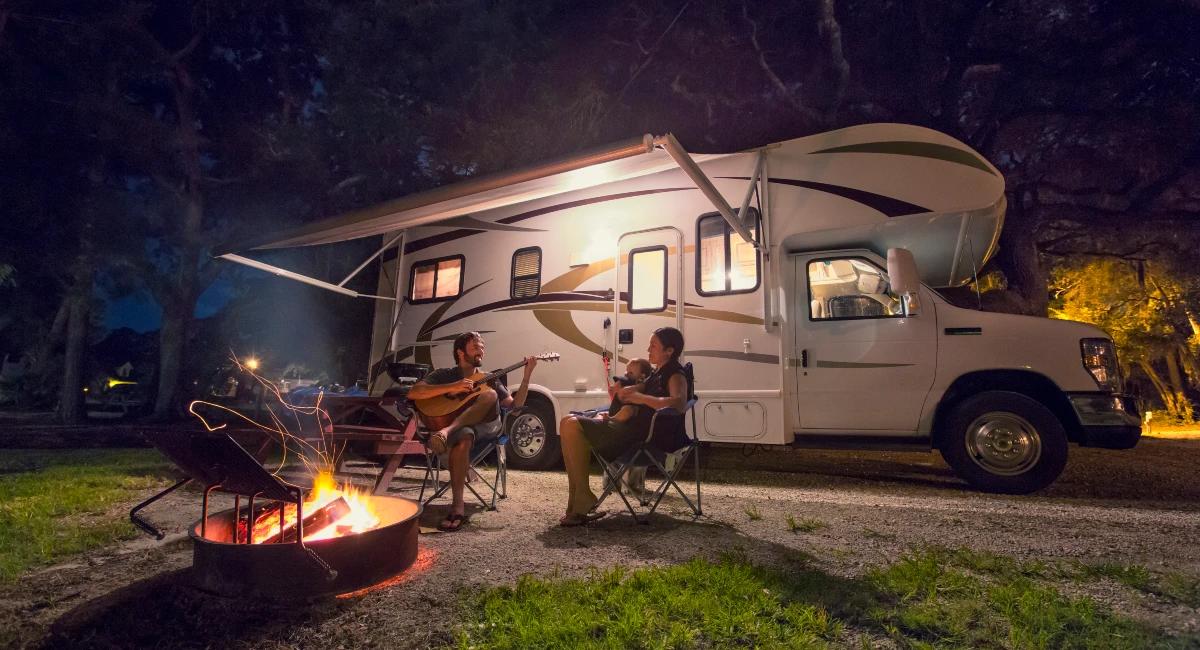
To really answer the question, let's put numbers side by side.
Below is a hypothetical 7-night, 1,000-mile trip for a family of four, two adults and two kids. Each line with a rental rate, fee, hotel rate, airfare, or fuel price links to its current source. Campsites, food, insurance add-ons, cleaning, rental car, and local taxes are our own round-number assumptions. Actual costs will vary, but this gives us a realistic comparison.
7-night RV trip (Class C motorhome): about $3,640
- RV rental: $1,400 — a Class C at $200 a night, the top of Outdoorsy's posted Class C average of $150 to $200
- Renter service fee: up to $280 (up to 20% of the rental)
- Fuel: about $535 — 1,000 miles at 8 mpg, the low end of a Class C's typical 8 to 10 mpg, with U.S. regular gas averaging about $4.27 a gallon in late October 2026
- Campsites: $350 — $50 a night, a mid-range figure for RV park rates
- Protection package: $150
- Cleaning fee and propane: 225(150 cleaning, $75 propane and generator use)
- Food: 700(500 groceries cooked on board, $200 for a few restaurant meals)
7 nights flying to hotels with a rental car: about $6,570
- Hotel: about $2,265 — two rooms at the U.S. average daily rate of $161.78 for August 2026
- Taxes and hotel fees: $300
- Flights: about $2,196 — four tickets at the average domestic round-trip fare of $549, before bag fees
- Rental car: $400 for a midsize car, plus $70 for rental car insurance if your credit card doesn't cover it
- Hotel parking: 140(20 a night, if charged)
- Food: 1,200(1,000 eating out most meals, $200 for groceries and snacks)
7 nights driving your own car to hotels: about $4,080
- Hotel, taxes, and parking: about $2,705 (same as above)
- Fuel: about $171 — 1,000 miles at 25 mpg at the same gas price
- Food: $1,200 (same as above)
Disclaimer: These figures are estimates and can vary widely depending on location, season, RV type, flight deals, hotel choices, and personal spending habits. Hotel rates near national parks in summer often run well above the national average, and a diesel motorhome pays more at the pump — diesel averaged about $6.35 a gallon that same week.
The big swing factor? Food and transportation.
When you cook most of your meals in an RV, you control that budget. When you fly a family of four and eat out multiple times a day, costs climb fast. Add baggage fees and surge-priced rentals, and suddenly the "simple" vacation isn't so simple. In our experience, families who would otherwise fly feel the gap most once bag fees and airport parking land on the card. Against a drive-to-hotels trip the gap is smaller, about $440 in this example, and it comes mostly from needing two hotel rooms and eating out.
When does a hotel beat an RV?
Short trips for small groups. Take a couple on a two-night weekend. A Class B camper van at $150 a night, the middle of Outdoorsy's posted range, comes to $300, plus up to $60 in service fee, a $150 cleaning fee, and $100 in campsites — about $610 before fuel or food. One hotel room at the national average runs about $324 for the same two nights before taxes. The hotel wins that one easily.
The math flips as the trip gets longer and the group gets bigger. The cleaning fee and the drive to pick up the rig are one-time costs that shrink with every added night, while a hotel bill resets in full every night and doubles the moment you need a second room. We've watched couples book a camper van for the trip itself rather than the savings and come home happy, so the cheaper option isn't the only one worth booking.
How to run your own RV vs. hotel calculator
Work out two totals for the same dates and route:
- RV total = nightly rate × nights + service fee (up to 20%) + protection + cleaning + campsites × nights + (miles ÷ your rig's mpg × local fuel price) + groceries
- Hotel total = room rate × rooms × nights + taxes and fees + parking + (flights + rental car, or your own car's fuel) + restaurant meals
Use the real listing for the RV side and real hotel quotes for your destination, not national averages. If the RV total is lower, or close and you value the flexibility, the RV is the better deal. For the line-by-line rental budget, our RV trip budget guide walks through each fee, and the guide to RV classes helps you estimate fuel economy by rig type.
Who saves the most with an RV?
The honest comparison comes down to how many people you're feeding and how many days you're traveling.
- Families and groups of three or more: cooking breakfast and lunch on board instead of buying restaurant meals for everyone, every day, tips the math hardest in the RV's favor.
- Week-long and longer trips: one-time fees spread out the longer you're out.
- Multi-stop road trips: a hotel means a new check-in and a new nightly rate in every city. One RV rolls the "room" with you the whole way.
- National park and rural trips: where hotel rooms are scarce, far from the park gate, or booked out months ahead, an RV site is often closer to the trailhead.
Renters we talk to on longer family trips say the grocery bill is where they feel the difference first. Independent research points the same way: a study comparing RV and non-RV vacations, done for the RV industry in 2023, found four-person RV trips cost 22% to 60% less per day than other vacation types. That study priced owning an RV, not renting one, so treat it as a direction rather than a promise for your rental.
How do you keep RV trip costs down?
A few real levers, in roughly the order they tend to matter:
- Ask about weekly or monthly rates. Many owners price longer bookings lower per night, and long-term RV rentals make that easy to compare.
- Travel shoulder season. Spring and fall generally see lower demand than the summer peak, which often means easier availability and a better rate.
- Mix free camping with hookup nights. A few nights of boondocking on public land in a self-contained rig cut your campground line. Winter snowbirds near Quartzsite, Arizona, can stay at the La Posa Long-Term Visitor Area with a $180 season-long BLM permit that runs September 15 to April 15.
- Pace the drive. Fewer miles a day burns less fuel. The popular 3-3-3 rule says to drive fewer than 300 miles a day.
- Match the listing to your route. Pick the rig whose mileage and generator allowances fit your plans, not just the lowest sticker rate.
We've seen renters who build their budget line by line from the actual listing and route land much closer to their real trip cost than those who anchor to one number from an article.
So…is RVing cheaper?
Often, yes. Especially for longer trips and families who value flexibility and built-in amenities.
But more than that, RV travel changes how you spend your money. Less on flights and restaurants. More on experience, flexibility, and time together. (Thinking bigger than a vacation? Here's the full cost of RV living.)
If your goal is the absolute lowest price for a two-night stay? A hotel might win.
If your goal is to explore more places, move at your own pace, and stretch your budget over a week or more? An RV starts to look like a pretty smart play.
And if you're doing the math anyway, you might as well factor in the value of waking up next to a lake instead of a parking lot.
That part doesn't always show up in the spreadsheet.
About this guide
Originally written by Outdoorsy author Sean Richards, updated in November 2026 by the Outdoorsy Editorial team. Facts in this guide were checked against official and primary sources, linked throughout. Fuel prices, hotel rates, and airfares change week to week, and every RV listing sets its own terms, so price your actual dates, listing, and hotels before you book.